Chess for kids: a parent’s guide
The practical questions, answered by someone who built a chess app for four-year-olds and had to work all of this out.
Teaching a child chess is mostly not about chess. The rules take an afternoon; what decides whether a child keeps playing is how the first month feels. These pages cover the parts nobody writes down: what a four-year-old can actually manage compared with a seven-year-old, whether a club or an app or a coach is the right thing to start with, why most chess puzzles are useless for a beginner, and what separates an app a child can use alone from one built for adults who already know the rules.
If you are looking for the chess itself, start with how to teach your kid chess or how the pieces move.
The four questions parents actually ask first
| Question | Short answer |
|---|---|
| Is my child old enough? | If they can follow "move it there", yes — what to expect at each age |
| Do I need to be good at chess? | No. Everything in the first month is a rule, not a skill |
| Club, coach or app? | They do different jobs — which to start with |
| How long should a session be? | Five to ten minutes, stopping while they still want more |
The one that matters most is not on the list: whether the child ever loses in a way that feels humiliating. Everything else is recoverable.
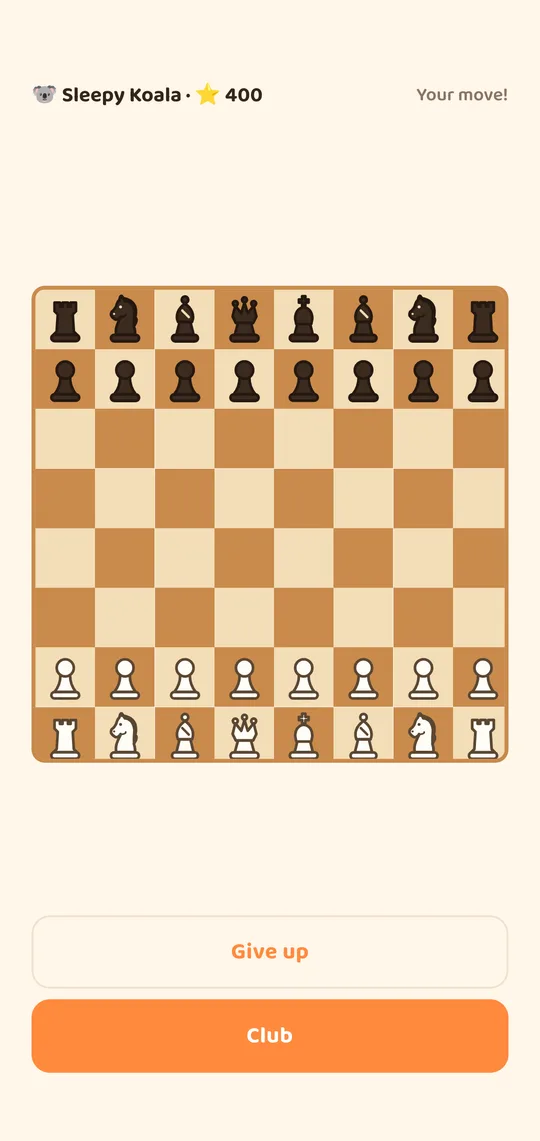
Let them practise it on a real board
- Eight mate-in-one puzzles, then real games against four opponents
- Endgame drills include the rook-and-king mate step by step
- No timers and no lives — a wrong move costs nothing