Chess puzzles for kids
Puzzles are the fastest way to improve at chess — and the fastest way to put a beginner off it, if they arrive too early.
Why standard puzzles fail young children
A typical puzzle shows a full board of thirty pieces and asks for the best move. A child who is still working out which piece is which sees noise. They will guess, be told they are wrong, and learn nothing.
What a good early puzzle looks like
Three or four pieces on the board and exactly one idea being tested. "Take the rook with your knight." "Get your bishop to the star without touching the other pieces." The child should be able to see the whole point of the position at a glance.
The order that works
- Movement — reach a square, in one move, then in two.
- Captures — take the piece; then take it safely.
- Check — give check, then get out of check.
- Mate in one — the first puzzle that feels like real chess.
- Tactics — forks and pins, from about seven or eight.
How many
Five a day beats fifty at the weekend. Puzzles work through recognition, and recognition comes from frequency.
Related
How the pieces movebefore any puzzle makes sense
Checkmatethe first real puzzle type
Club, coach or app?what each is good at
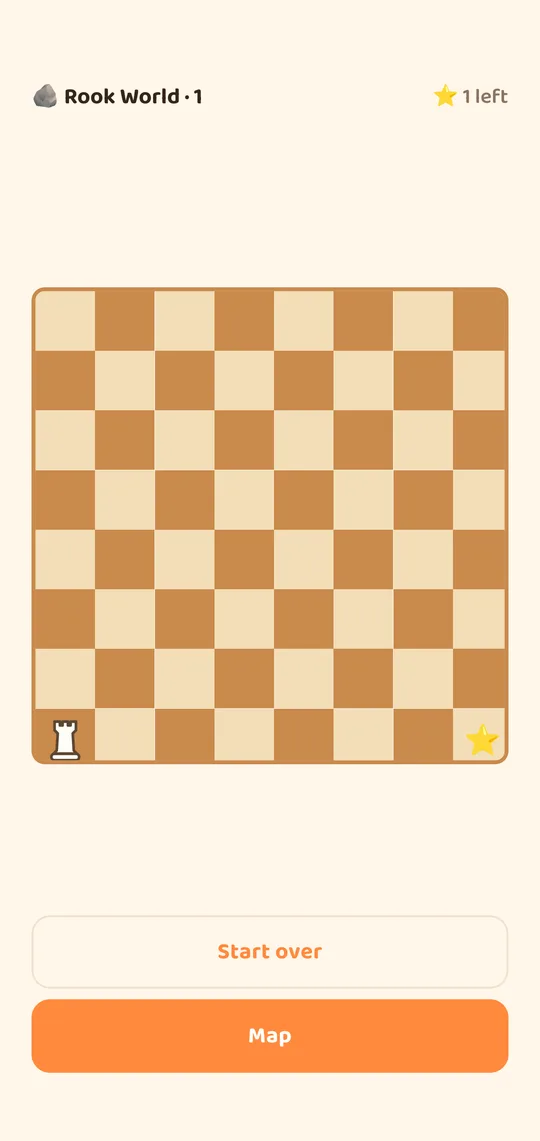
78 puzzles, in exactly this order
- Two modes: voice-only for ages 4–6, written lessons for 7+
- A grown-ups area behind an adult gate shows what has been learned
- No ads, no purchases, no accounts and no data collected at all