What age can a child start chess?
Earlier than most people think, provided you do not start with the whole game.
Four to five
A four-year-old can learn how a rook moves and play a game where the only goal is to reach a target square. What they cannot do yet is hold six different movement rules in mind at once, plan ahead, or read the notation in a chess book. Sessions are five minutes, one piece at a time, and the adult does the reading.
This is the age where a child who cannot yet read is usually shut out of chess entirely — which is why anything you use at this age has to speak, not write.
Six to seven
All six pieces, a full game, and the beginning of "if I go there, what happens?" Check and checkmate make sense. This is the age most chess clubs will take a child, and the age at which playing a whole game stops being an ordeal.
Eight and up
Tactics — forks, pins, mate in two — start to land, and a child can work through puzzles alone. Improvement becomes possible in the way adults think of it.
The thing that matters more than age
Whether the child ever loses in a way that feels humiliating. Chess punishes mistakes immediately and visibly, and a five-year-old who gets crushed four times will decide they are bad at chess and be right, by their own evidence. Take moves back, remove your queen, let them win — for months, if that is what it takes.
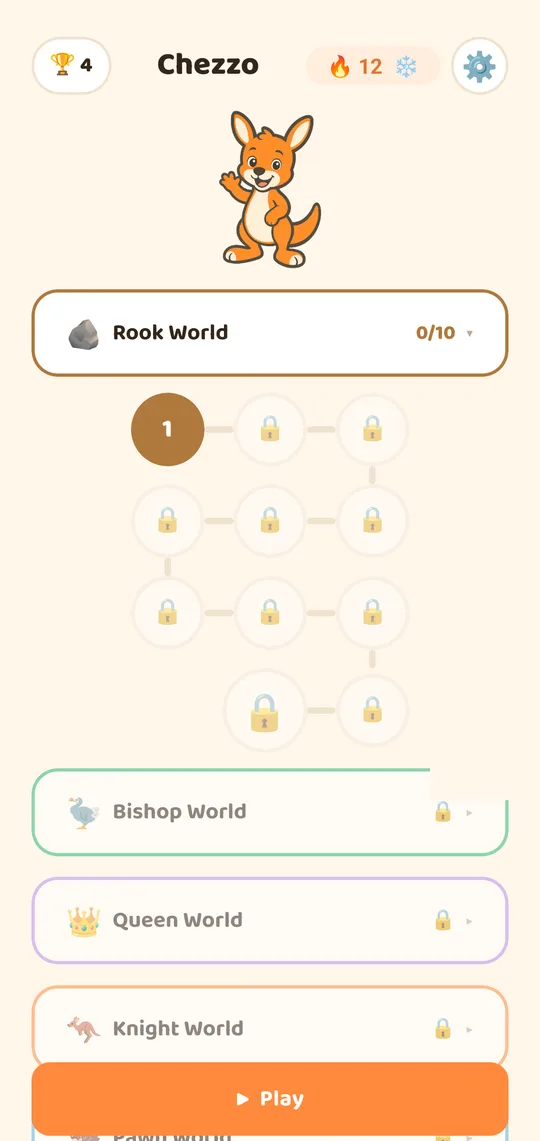
Built for ages four and up
- Two modes: voice-only for ages 4–6, written lessons for 7+
- A grown-ups area behind an adult gate shows what has been learned
- No ads, no purchases, no accounts and no data collected at all