How to teach your kid chess
You do not need to be good at chess to teach it. You need the right order, very short sessions, and something for the child to practise on between them.
Start with one piece, not the whole game
The usual mistake is setting up all thirty-two pieces on day one and explaining six different movement rules before anyone has moved anything. Children stop listening around the third piece — and fairly.
Instead, clear the board and put down a single rook. Ask the child to move it to a square you point at. That is a complete first lesson, and it takes four minutes.
The order that works
- Rook — straight lines. The simplest rule, so it is the one that teaches "a piece has a rule".
- Bishop — diagonals. Now there are two rules to tell apart.
- Queen — both at once. No new rule to learn, which is why she comes third and not first.
- Knight — the L, and the only jumper. The hardest one, so give it its own day.
- King and pawns — slow, fussy, and the reason the game has a point.
Only after all six does the full board make sense. Setting it up is a lesson in itself, and one children enjoy because it is a job they can do alone.
Keep the sessions absurdly short
Five to ten minutes. A child who stops while still interested comes back tomorrow; a child who plays until they are bored has learned that chess is long and hard. This is the single biggest difference between children who keep playing and children who quietly stop.
Never let a mistake cost them the game
Beginners hang pieces constantly. If every blunder loses the game, the lesson a child takes home is that they are bad at chess. Take moves back freely, play with fewer pieces, or let them win outright for the first few weeks — the rules police can arrive years later.
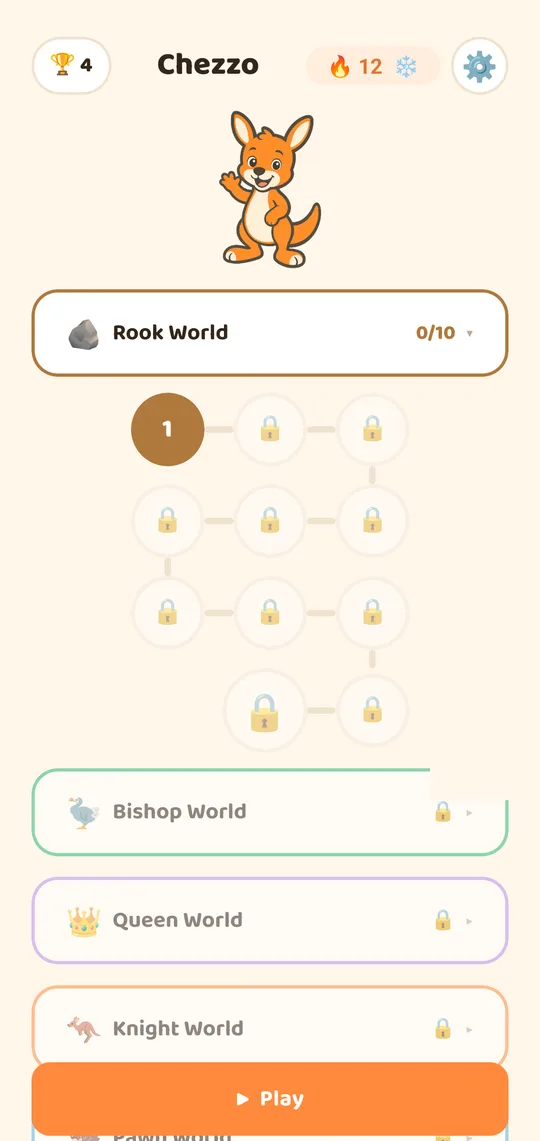
Let them practise between your lessons
- 78 hand-made lessons across eight worlds
- A club with rated games, guided openings and endgame drills
- Free, offline, and it collects nothing about your child
What to teach next
Common questions
What age can a child start learning chess?
Most children can learn how one or two pieces move from about four, and can play a full game with an adult from five or six. What matters far more than age is teaching one piece at a time — a four-year-old who knows only the rook can already play a real game with only rooks on the board.
I am not good at chess. Can I still teach it?
Yes. Everything on this site is a rule, not a skill. If you can set up the board and explain how a rook moves, you are ahead of your child, and that is the whole requirement for the first month.
How long should a chess lesson be?
Five to ten minutes for a young child. Stop while they still want more.